 As boulevardier of the arts, it is my pleasant duty to share with you several items that have caught my eye of late…
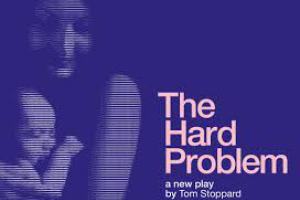
I haven’t seen it. I haven’t even read it. But Tom Stoppard’s new play, The Hard Problem, now playing at the National Theatre in London, has already sparked my interest more than any other recent work of art.
Stoppard’s play is concerned with what philosophers call the “hard problem” of human consciousness. Many today think we human beings are just “stuff” all the way down to our mitochondria. But the fact of consciousness apparently eludes materialist explanation, and suggests a foundation of morality and human dignity in something more than material.
In typical Stoppardian style The Hard Problem presents a dialectic between the materialist and non-materialist positions. Here are Stoppard himself and outgoing director of the National Theatre, Nicholas Hytner, discussing the dialectic of The Hard Problem:
I saw two pretty good movies in the past week. I really enjoyed Kenneth Branagh’s Cinderella. It’s being called “traditionalist” and “un-ironic” and I say hooray. I think we deserve a break from all the deconstructed fairy tales that for too long have claimed unmerited attention as films for the whole family.
Cinderella is a welcome celebration of such unfashionable qualities as humility, generosity, forgiveness, and romance grounded in virtuous character.
My wife observed that one of the film’s nicest features is the sense of self-possession exhibited by both Cinderella and the Prince, self-possession founded upon strong relationships with their fathers.
And about Cinderella’s retro style of “princessness,” my teenage daughter put it well: “Cinderella shows us that a girl doesn’t need to carry a sword in order to be a strong female character.”
In this interesting article Father Robert Barron reminds us of the Christian allegory that lies at the heart of the Cinderella story, and how Branagh’s film helps bring it to light.
Here’s Branagh himself talking about the film:
I finally got to see Eddie Redmayne’s deservedly Oscar-winning portrayal of Stephen Hawking in The Theory of Everything. This is a very captivating film with excellent performances throughout, though the disintegration of Stephen and Jane Hawking’s marriage after all those years of devotion–especially Jane’s–was a major letdown. The film wants us to see this as redeemed by the fact that they produced three beautiful children and that each eventually found happiness with another partner. But I couldn’t help seeing their break-up as an undermining of all those years of Jane’s unswerving commitment.
Jeers for the television adaptation of Wolf Hall, based upon the Booker Award-winning novels by Hilary Mantel, Wolf Hall and Bring Up the Bodies, for the outrageously revisionist portrait of Sir Thomas More. (For the antidote, see Gerard Wegemer’s, Thomas More: A Portrait of Courage.)
Thankfully, there are three new episodes of Foyle’s War to watch, which my family and I are enjoying via the Acorn TV app projected onto the big screen with our Apple TV. Certainly one of the better uses of modern technology. If you’re a fan of Michael Kitchen and Foyle’s War, then you’re going to enjoy this…
Scott Timberg’s new book, Culture Crash, reviewed by Ben Yagoda in this week’s New York Times, raises some interesting questions about the state of the arts in our polity. Timberg sees decline and fall, while Yagoda sees this worst of times as also being, quite possibly, the best of times. Does indie art exploiting the uses of the Internet make up for the decay of more traditional arts associations? One compelling question, among many, raised by Timberg’s book and Yagoda’s review is whether virtual interactions are as creatively productive as in-person ones. Would love to get your take on that.
What books are on my nightstand? Currently I’m reading, and enjoying, Edith Wharton’s The Age of Innocence. Haven’t read any Wharton before this. Meanwhile I’m flipping through, like magazines, Kenneth Slawenski’s biography of J.D. Salinger and Penelope Niven’s life of Thornton Wilder.
Meanwhile, I continue to beaver away on my next novel, a darkly comic escapade I’m calling The Death Symposium, as well as on the script of a musical based upon the subversive theatrical activities of the young Karol Wojtyla, the man who would become Pope John Paul II.
So what art have you enjoyed of late? Let us hear about it!
*The image above of the National Theatre, perhaps the ugliest theatre in the galaxy, is reproduced courtesy of Carlos Delgado at Wikimedia Commons.