Today, and continuing throughout November, I am presenting a series of posts I’m calling The Happiness Plot, which will make up a very brief introduction to storytelling structure. A perfect way to stay in the groove for NaNoWriMo2014.
For BONUS CONTENT related to The Happiness Plot, as well as special offers of FREE CONSULTING for writers, sign up below for The Comic Muse Email Newsletter. It’s free!
Ready to uncover the plot?
To find the beginning of The Happiness Plot, click here or “The Happiness Plot” category listing to the right.
Now, we continue with The Happiness Plot…
Robert McKee and the Controlling Idea
15.
The argument of the story is its plot. But just how does a plot argue?
McKee is quite good on this point. Storytelling, he tells us, is the creative demonstration of truth, the conversion of idea into action. But how does the “demonstration” work? “A story’s event structure,” explains McKee, “is the means by which you [the writer] first express, then prove your idea…without explanation.”
So it’s the “event structure,” the plot, that does the arguing. But somehow it does so without a lot of explaining on the part of the author. Master storytellers, says McKee, never explain. As David Mamet once put the same thought, the whole trick is never to write exposition (i.e., explanation of the events).
Now, setting aside the fact that some pretty good storytellers are also some pretty fulsome explainers (e.g. Dickens, Henry James, and, in a much quirkier way, Muriel Spark), we need to know what it is about the plot of a story that, all by itself, without the author holding its hand, is capable of arguing for the truth.
Let’s begin with McKee’s concept of the Controlling Idea. McKee prefers the term Controlling Idea to that of “theme” because “like theme, it names a story’s root or central idea, but it also implies function: The Controlling Idea shapes the writer’s creative choices.”
A Controlling Idea, McKee explains, can be reduced to the following equation:
VALUE + CAUSE
The Controlling Idea “identifies the positive or negative charge of the story’s critical value at the last act’s climax, and it identifies the chief reason that this value has changed to its final state. The sentence composed from these two elements, Value plus Cause, expresses the core meaning of the story.”
In her posthumous collection, Mystery and Manners, Flannery O’Connor remarks about her famous short story, “A Good Man is Hard to Find,” that the free act, the moment of grace, that makes the story work is “the Grandmother’s recognition that the serial killer known as the Misfit is one of her own children.” Here we have a Controlling Idea, or part of one. At the story’s climax a positive value or charge comes into being: the Grandmother experiences a moment of grace in recognizing the brutal killer confronting her as one of her own babies. What brings this positive value into being? What is its cause? Ironically, it is the very brutality and theological confusion of the Misfit. O’Connor was fascinated by the way in which violence and the grotesque distortion of human dignity can often be the means by which the spiritually complacent are returned to reality and prepared to accept their moment of grace.
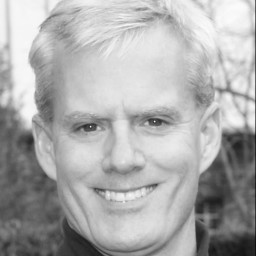
*The image above of Robert McKee is reproduced courtesy of Aleksandr Andreiko via Wikimedia Commons under the following license.